Be yourself, be surrounded, be agile: agility as a mindset
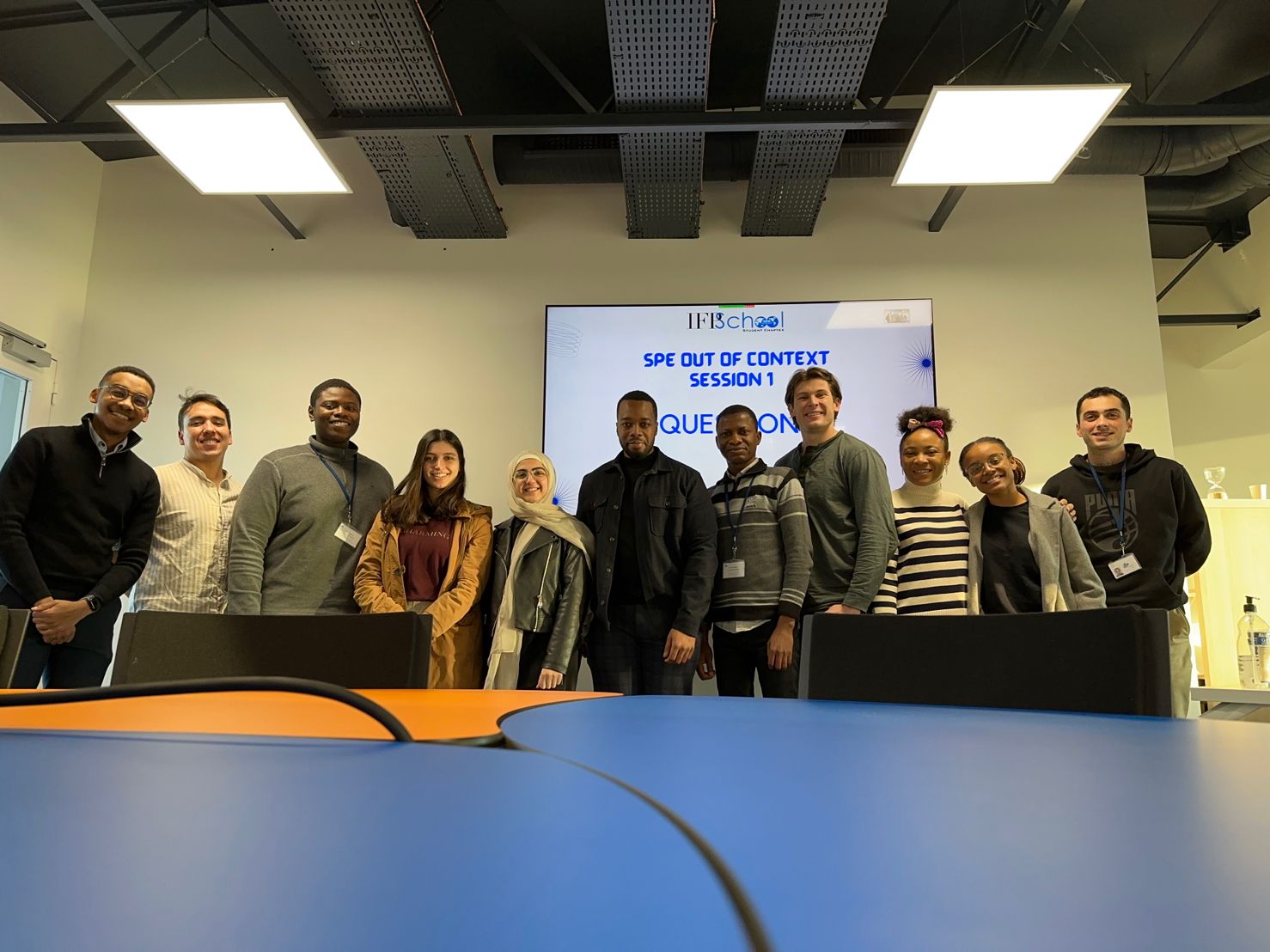
"Be yourself, be surrounded, be agile." Those are the three words I closed with at the SPE out of Context session I had the pleasure of running at the SPE Student Chapter of IFP School. The theme: my journey from engineer to entrepreneur — and what I wish someone had told me earlier.
We talk about agility a lot as a method: Scrum, sprints, ceremonies. That's true, and I cover it elsewhere. But before it is a method, agility is a mindset — a way of moving forward through uncertainty. And that mindset comes down to three simple ideas.
From engineer to entrepreneur: anything but a straight line
I started out as a network and security engineer, working on large infrastructures. Then I led projects for major corporations, trained teams in agility, co-founded an app used across eight countries, and today I'm CTO of an AI product in healthcare.
From the outside, it looks like a trajectory. From the inside, it's a series of trials, turns and adjustments. Nobody moves from an idea to a product in a straight line. What changes everything isn't having the perfect plan from day one — it's the ability to learn fast and correct course.
Start with why
Throughout the session, the common thread was a concept I'm especially fond of: Simon Sinek's "Start with Why." Before talking about how you build a solution, or what you build, you have to be clear on the why.
It's true for a startup as much as for a feature inside a large company:
- The why gives direction when everything else is blurry.
- It aligns the people around you far better than a spec sheet.
- It stops you from spending months building something nobody needed.
An idea only becomes a product with impact if it answers a real why. The rest — the tech, the roadmap, the design — is just execution in service of that intent.
Be yourself: your singularity is an advantage
The first piece of advice I give students is to stay themselves. When you start out, the temptation is to copy someone else's path, to tick boxes, to look like the "typical founder."
That's a mistake. Your unconventional background, your dual culture, your first job that seems "unrelated" — those are precisely the things that give you an angle no one else has. My past as a network engineer still serves me today when I design products, in ways people didn't expect.
Authenticity isn't a nice-to-have. It's a strategic advantage: it's what makes your proposition unique and credible.
Be surrounded: you build nothing alone
The second idea is probably the most underrated. You build nothing alone.
The people you meet matter as much as your skills. Some of the most important collaborations of my professional life came from conferences, chance encounters, people I crossed paths with on the other side of the world and kept in my circle. To this day, I regularly support project founders, from the first pitch to launch — and it's often those conversations that tip an idea into reality.
Being surrounded isn't just "networking." It means:
- surrounding yourself with people who tell you the truth, not just what you want to hear;
- bringing together expertise you don't have, instead of carrying everything alone;
- accepting advice, and giving it in return.
That is exactly the philosophy behind Twenty: a complete team — development, infrastructure, data, cybersecurity — so a founder is never left alone facing the technical side.
Be agile: move in iterations, not certainties
The third idea ties the rest together. Being agile means accepting that you don't know everything at the start — and moving forward anyway, in small, measurable steps.
Rather than aiming for the perfect plan, you ship a first version, observe, learn and adjust. That's true for a feature and for a career. Agility isn't improvisation: it's a discipline of learning. (For the "method" version — Scrum, SAFe, deadlines — I cover that in this article.)
That was the whole point of the hackathon that followed my talk: stepping out of theory and getting hands dirty. In a few hours, participants went from an idea to a draft solution — by asking the why first, then iterating fast. Nothing replaces that concrete experience of "doing."
From idea to impact
Be yourself, be surrounded, be agile: these three principles don't conflict with the rigor of a large group — they complete it. That's exactly what I strive to bring to every project: the solidity of a large group, with the agile mindset of an entrepreneur.
Thanks to the SPE Student Chapter at IFP School for this session, and to all the students who made it come alive. Many ideas are still waiting to become products.
Let's talk about your project
You have an idea and a clear why, but you don't know where to start? That's exactly where I come in. Let's book 30 minutes — free and with no strings attached — to turn your intuition into a concrete action plan.
Message me on WhatsApp at +33 6 34 42 50 56 or by email at contact@twentyconsultancy.com. Wherever you are, the reply will be fast.